


16 May Mr. Market
“Looks like what drives me crazy
Don’t have no effect on you–
But I’m gonna keep on at it
Till it drives you crazy, too.”
― Langston Hughes, Selected Poems
Over 70 years ago, Benjamin Graham created the most enjoyable, compelling, and instructive parable ever created. Or at least for those who love investing. A proper understanding and its application are of paramount importance if you want to stand out from the crowd. And that is something you want to do either to avoid great losses, or to cash in on your profitable investments. The parable is about a very popular bipolar stock dealer, and his name is Mr. Market.
He is a guy that you know very well. Mr. Market comes to your doorstep with a briefcase every day, from Monday to Friday to trade with you some of his merchandise: parts of businesses, or more technically, shares. He is always willing to make a deal with you, to buy or sell as many shares as you want, but these deals he offers fluctuate as much as his moods. Some days, when you open the door, you find him with a big smile on his face. He is radiant, full of happiness and positivism. Other days, he looks very disappointed, like if he was bearing bad news, depressed and with a very negative attitude. In those shinny days, he offers you stocks for ridiculously high prices, as he believes the stocks will perform incredibly well in the near future. In days where he seems to have dark clouds around him, he offers you those same businesses but for inconceivably low prices, which for you, of course, look like wonderful deals. Those businesses haven’t changed their intrinsic characteristics. They still have promising prospects, but their stock prices are completely different every day. But that’s not all, because he has another very peculiar characteristic: he does not mind being ignored. He won’t feel offended if you pass on his deals. After listening to his offers, you could just harshly slam the door right on his face and he will come back to you on the very next day with new deals… and maybe even happier to see you!
Interesting guy, right? Now, if this situation happened to you, would you let yourself be influenced by his changing moods? Would you fall under his manic-depressive personality when valuing firms? Or would you see that bipolar behavior as an opportunity to buy and sell wonderful businesses? As you have understood, the story is a metaphor for the stock market. And as shocking as it may seem, investors still act irrationally and get carried away by Mr. Market’s attitude.
Graham figured that investing is not only a matter of researching, understanding, and analyzing businesses. It’s also about being psychologically prepared for fluctuations of stock market values.
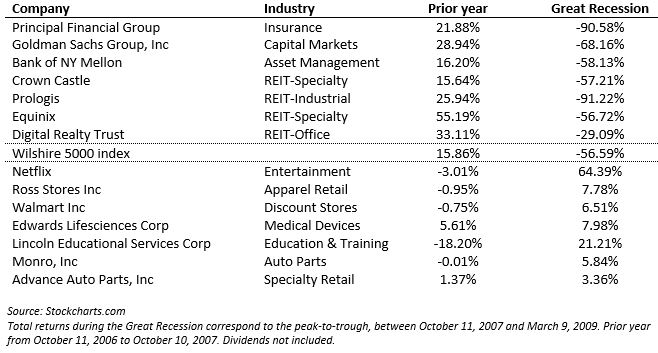
For better and worse, this is the never-ending story. This phenomenon was also seen back in the dot-com bubble, when internet-based companies were pushing up the market to new highs. In the meantime, “smart money” was flying away from hundreds of firms with strong fundamentals to those that were meant to revolutionize the world. And some did, but the vast majority disappeared forever. During the Great Depression, tens of companies were “worth more dead than alive” as they were selling at below the value of their cash and other liquid assets… combined!
There are, however, countless smart individuals out there buying and selling shares and, despite falling from time to time under the influence of Mr. Market, or by necessity in the case of institutions, they do an exceptionally good job valuing companies. So, although prices may fluctuate a good deal over the short run, eventually, market prices will match the intrinsic value of those businesses over the long haul. In other words, if you own undervalued shares, you must be patient because sooner or later–and sometimes it can be rather later–the market will be willing to pay a fair price for them. But remember, not just because a stock is cheap it means that its price will rise at some point. It must be undervalued; that is, the price below its true value according to the fundamentals.
To conclude, don’t forget to use Mr. Market’s attitude in your favor. He is your servant after all. Take advantage of it. Don’t get frustrated if prices go down, as you have very good chances to find firms at attractive prices. Sell to him if he is willing to pay a price well above the value of what you own. Investing is as much about financial education as about being mentally strong.